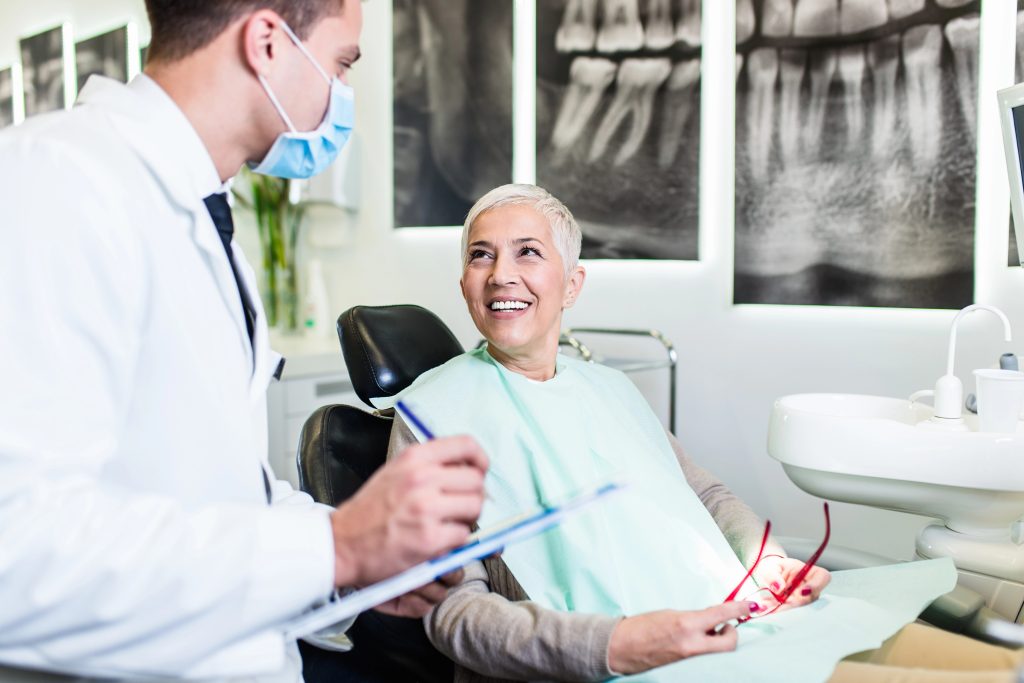
Regular dental appointments keep your smile healthy, but they also give some insight into other health indicators. One example is osteoporosis, a disease that weakens bones, making them more susceptible to fractures.
While a dentist is not the provider who will diagnose osteoporosis, your teeth can reveal warning signs related to bone loss in your jaw.
What is Osteoporosis?
Osteoporosis is a medical condition characterized by a decrease in bone mass and density, which leads to fragile bones. Many do not know they have it until they experience a fracture, such as a broken hip.
While osteoporosis can affect anyone, it is most common in older adults, particularly postmenopausal women. The condition impacts all bones in the body, including the jawbone that supports your teeth.
Changes in Jawbone Density
One of the ways a dentist might suspect osteoporosis is through changes observed in the jawbone. When bone density decreases throughout the body, the jaw is also affected. This loss of density can make the jawbone more porous and less substantial.
Dental X-Rays
Dental X-rays provide a detailed view of the bone levels supporting your teeth. These images are fundamental for diagnosing cavities and gum disease, but they also serve a secondary function in assessing bone health.
Studies have shown a correlation between low bone mineral density in the jaw and low bone mineral density in other parts of the body, like the spine and hip. If your dentist observes significant bone loss around your teeth or a generally less dense appearance of the jawbone on your X-rays, it may be an indicator of underlying osteoporosis.
This finding would lead to a referral to your primary care physician for a formal bone density scan, known as a DEXA scan.
Loose Teeth and Dentures
A strong jawbone is what holds your teeth securely in place. When the jawbone loses density due to osteoporosis, it can weaken the support structure for your teeth. This can result in teeth becoming loose or shifting. If you notice new or increasing mobility in your teeth without an obvious cause like advanced gum disease, it could be related to systemic bone loss.
For patients who wear dentures, osteoporosis can present unique challenges. Resorption of the jawbone that supports dentures caused by osteoporosis can cause dentures to become ill-fitting. If you find that your dentures suddenly feel loose or require frequent adjustments, it may be a sign of underlying changes in your jawbone structure.
Receding Gums
While gum recession is most commonly associated with gum disease, it can also be linked to bone loss. The gums are supported by the underlying bone. As the jawbone loses mass and recedes, the gum tissue may follow, exposing more of the tooth root. If your gums are receding but you have good oral hygiene and no signs of advanced gum disease, it may be another piece of the puzzle pointing toward potential systemic bone issues.
Are You Concerned About Osteoporosis or Jaw Health?
Of course, if you have symptoms or are at risk for osteoporosis, talk to your primary care doctor to discuss diagnostic tests and your next steps.
You should also schedule a dental appointment to discuss any concerns about jaw, gum, or tooth health with your dentist. During your exam, we do more than just check for cavities; we also assess soft tissue and jaw health. If we notice signs that suggest potential bone loss, we will discuss them with you and recommend a follow-up with your medical doctor for a complete evaluation.